Cheap apartments marketed as “luxury,” housing monopolies and the rising cost of living have made affording housing in college more difficult than ever before.
By Grace Aigner, Atticus Marse, Megan McHugh and Jordan Venell
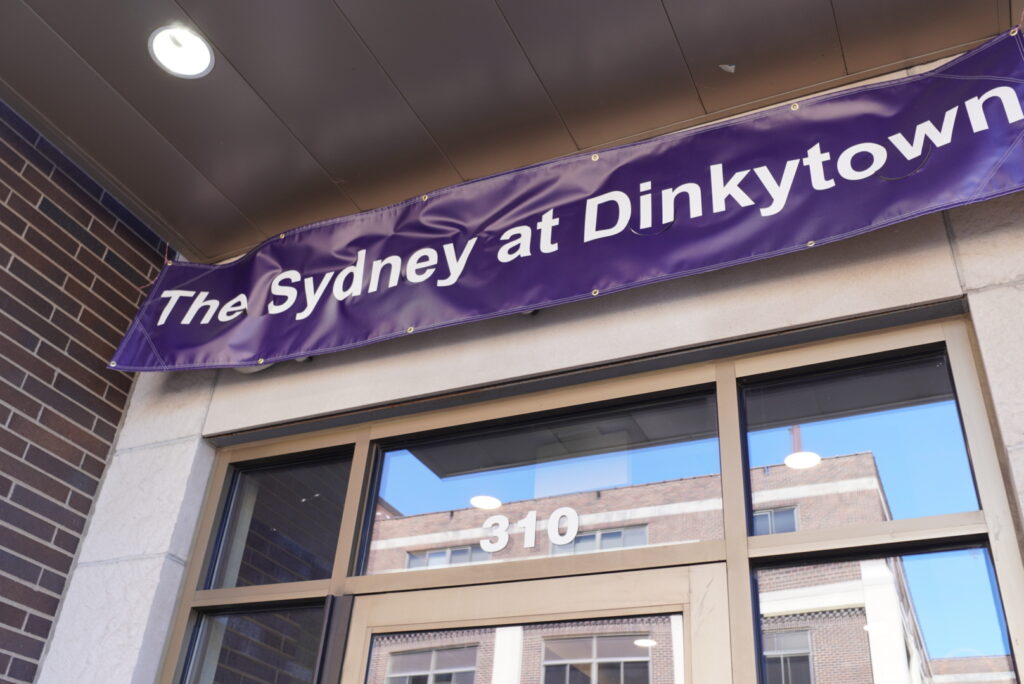
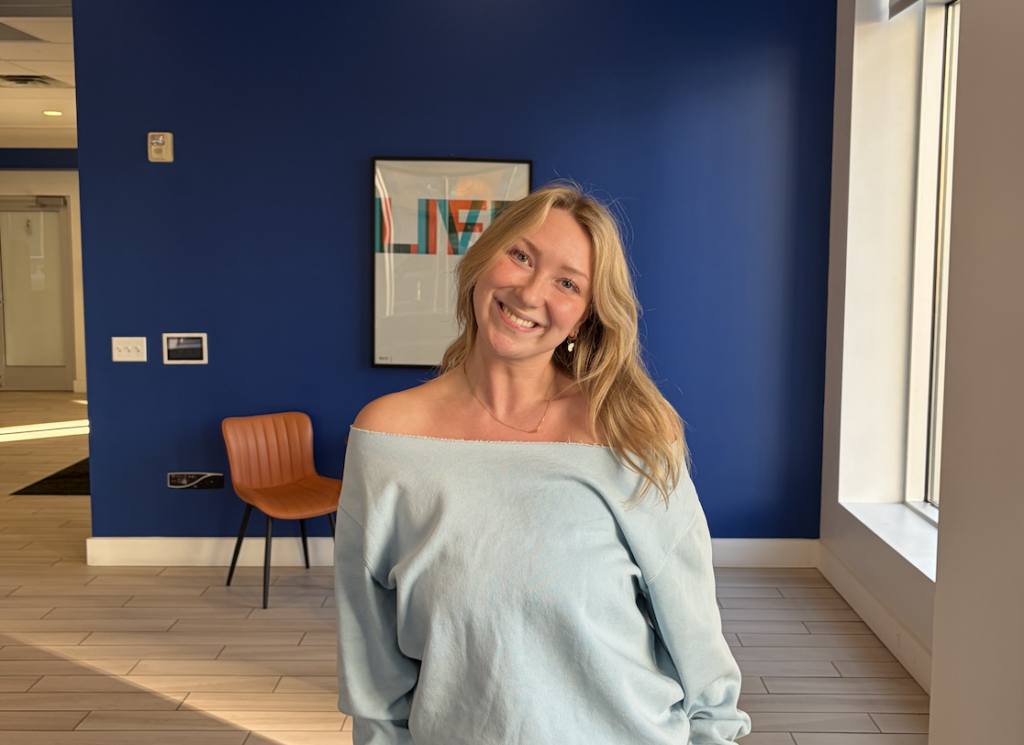
Willow Hosmer walked past a poster in her apartment building that caught her eye. Her Dinkytown apartment—Sydney Hall—was promoting a lease discount. The poster featured photos of the apartment complex’s lobby and game room.
But there was a problem, Hosmer said. The game room Sydney Hall was using to advertise no longer exists.
“I’m like ‘Huh? What do you mean?’” Hosmer, a third-year student at the University of Minnesota, said. “They say on the posters ‘Community space, game room,’ but they kind of leave out the fact that the game room is literally our front hallway.”
For the last two years Hosmer has paid about $1,200 a month for rent and a parking space at Sydney Hall. She has her own room and one roommate. She said the deceptive poster represents her experience living at Sydney Hall, an apartment complex that made empty promises about “luxury” student living.
“No matter what, I am not gonna be living here next year, I just simply can’t afford it,” Hosmer said. “Why am I paying so much for literally just the location?”


Dinkytown’s average apartment rent costs about $415 more per month than Minneapolis’ city-wide average. The neighborhood butts up against the University of Minnesota campus and is home to a large student renter population.
Average rent prices have steadily increased over the last 30 years, generally in lock-step with national inflation rates. When inflation increased to almost 7% in 2021-2022, average rent prices nationwide spiked with it, according to data from the U.S. Bureau of Labor Statistics.
But inflation rates don’t entirely explain the continuous rent increases for apartments in Dinkytown. The 2025 inflation rate was about 3%. The cost of rent for one, two and four bedroom apartments in Dinkytown increased by 4, 3 and 8% in the last year.
A housing market that demands sacrifice
In addition to rent increases, students like fourth-year student Arelys McDevitt often have to navigate predatory leasing tactics. McDevitt said student tenants remain subject to less-than-fair strategies employed by management companies to encourage early lease renewals.
“We’ve caught some apartments doing some sketchy stuff,” McDevitt, who works in the leasing office at Venue apartments, said. “Places like the Marshall were making people sign earlier for a renewal, saying the due-date was getting closer and closer, when it wasn’t for months.”
Recent legislation aims to protect tenants from this practice. One law, which took effect on Jan. 1, 2025, prohibits landlords from requiring tenants to renew their lease more than six months prior to its end date.
But leasing regulations can be confusing and unclear for students signing their first leases, McDevitt said, so Venue prides itself on honesty and transparency.
“The rules are a little blurry,” she said. “At the Venue, we are really straight up. We know what we are offering. It’s not the best apartment you can get, so we’re gonna be as honest as possible and offer incentives to those who do want to sign early.”

Leasing difficulties are not unique to luxury apartment complexes. Students looking to rent a house in off-campus neighborhoods like Como and Marcy-Holmes can struggle to find affordable options. Large rental corporations like GoGopher Rentals and Dinkytown Rentals manage an increasing number of properties in these neighborhoods, decreasing price competition and making it hard for students to find wallet-friendly housing.

While rental companies grow their monopoly of off-campus house rentals, large, “luxury” apartment complexes are overtaking smaller, independent apartment buildings—shrinking students’ already limited housing options in Dinkytown.
“The Venue wiped out a bunch of houses when it was built,” McDevitt said.
The Standard, a 17-story high-end apartment, opened in August 2025 and marks the most recent addition in Dinkytown’s shift toward an apartment complex-dominant housing market.
Many students opt to rent a house with roommates during their junior and senior years. But because of the limited supply and high demand of off-campus houses, its rare students find an option that meets all of their needs—sacrificing money, location or quality are often necessary.
Some student renters add extra roommates to a lease, pay more in rent than they can afford or end up living in inadequate housing conditions. Most student complaints to the University of Minnesota Student Legal Services are about landlords not keeping their property conditions up to standard, according to reporting from the Minnesota Daily.
One of the most common sacrifices students make to pay rent is their free time, picking up one or two jobs to afford a more comfortable apartment or house.
An affordability loophole
For a small population of students, affording rent in Dinkytown means working where they live. Sometimes apartments offer a discount on rent to students who work in their leasing offices.
Kaden Kirsch, a fourth-year student at the university, said the trade off was worth it. He was working 15 to 20 hours a week at Venue’s leasing office, and got about $100 shaved off his rent.


He said he and his roommates were entirely focused on affordability when they were looking for a place to live.
“The primary reason that I work here was so I would be able to pay for it,” Kirsch said.
With the rent discount, Kirsch was able to get the largest room in the unit and stay in the apartment even after his roommates moved out. He said the unit itself is spacious, but it lacks the nicer amenities offered at nearby apartments.
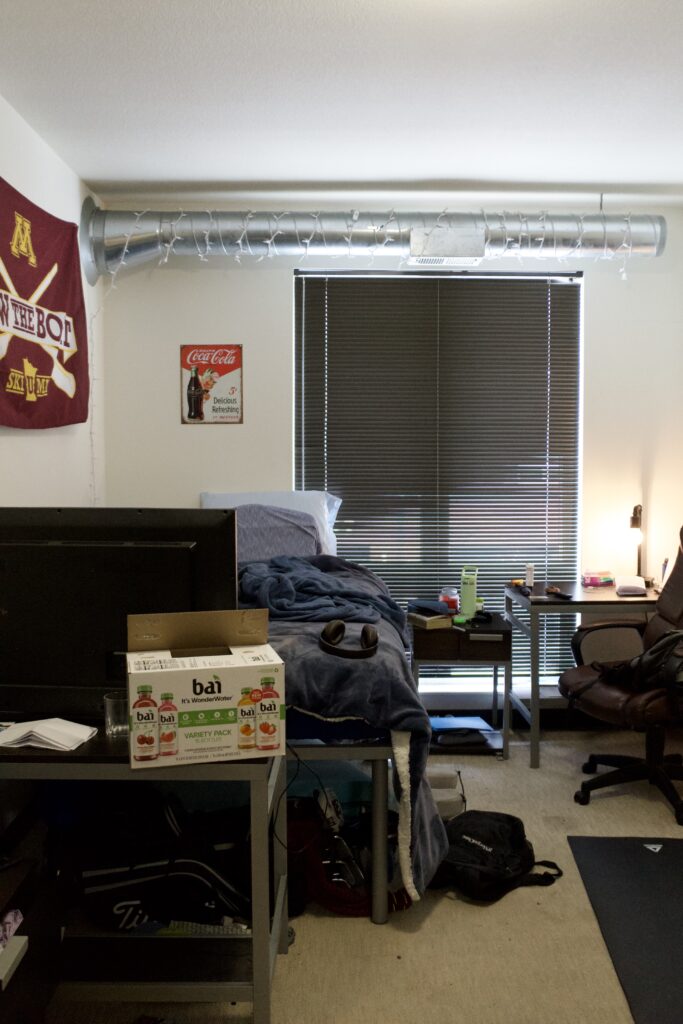

“If I didn’t get that, I would not have stayed,” he said.
These rent-discount incentives aren’t always consistent. McDevitt worked as a leasing agent at Venue for almost three years after moving into the apartment building her sophomore year. She spent her time working by giving tours and helping fill units—a job similar to Kirsch’s. But unlike Kirsch, McDevitt never got a rent discount.
“Honestly, the reason why I did it in the first place was because I thought there was gonna be a discount,” she said. “I never got any lease-based or living-based incentives.”
Kennedi Hill, a fourth-year student, worked at the front desk for The Standard in fall 2025. She was one of many student employees that assisted with tours, mail processing and customer service.
Despite getting a 25% discount on her rent, Hill didn’t think the time commitment or money was worth it during her senior year.
“It’s for sure a lot less financial freedom,” Hill, who pays her own rent, said. “I have to look a lot more closely at what I’m spending.”
Haven’t college students always lived in shoddy apartments?
Kirsch, McDevitt and Hosmer all have seemingly high-quality housing—for a high price tag. The living situations for previous generations of university students weren’t quite as modern and spacious as today’s off-campus housing.
Justin McHugh, 53, from Minnetonka, graduated from the university in 1995. During his college years he lived in dorms, apartments and houses as a student and Gopher hockey player.
“I mean, we stayed in shitholes,” McHugh said. “I’m not saying—not shitholes, but really, really, really bad places. We had squirrels in our house, chipmunks in our house.”

McHugh said when he and his roommates were looking for an apartment during their sophomore year, there was only one large, “luxury” apartment building where students consistently got their own rooms.
“That’s where all the rich kids stayed,” McHugh said.
McHugh said the quality of student housing today seems far higher than what he experienced, even having your own room was rare when he was in school.
“It just seems like everyone now is like, they want to get their own room,” McHugh said. “That was such a luxury back when we were going to college to have your own room. I didn’t have my own room until my junior year.”
Ryan Kroells, 46, started at the university in 2000 knowing he would not be receiving any financial support from his family for school. He said he enrolled in the Reserve Officer’s Training Corps and became a Community Advisor in a dormitory to cover his tuition.
“I was trying to find a magical solution that would allow me to have a relatively normal life, not go deeply into debt and still have a good, positive college experience,” Kroells said.

After graduating from the university, Kroells went on to have a 30 year career in the U.S. military, is now a colonel and is working on his PhD in international relations at Tufts University. He said the difficulty of the physical and social sacrifices he made as a student, they were worth it.
The “luxury” marketing tactic
While the overall quality of college living spaces has improved since McHugh and Kroells were students, a new problem has developed: apartments charging expensive rent under the guise of providing high-end, convenient student living.
When Hosmer and her roommate were looking for somewhere to live off-campus two years ago, they knew they needed somewhere within walking distance to the university campus. They were looking for a fairly cheap lease, but quickly realized that was hard to find if they prioritized being close to campus.
Sydney Hall seemed nice, it had a game room, a gym, fully-furnished units and was less than a block away from campus. Hosmer’s parents thought it was a great space compared to where they lived during college, so she signed a lease.
But after almost two years of living there, Hosmer doesn’t think she’s gotten what she paid for. She said her apartment’s air-conditioning rarely works, her dishwasher doesn’t wash the dishes and the management staff seldom have answers to questions, or maintenance help to give.
“I’ve gone to them a bunch of times being like, ‘Hey, my AC keeps freezing over,’” Hosmer said. Pretty much their solution is that I have to shut my windows, like my shades, when it’s sunny, but I paid extra to have a corner apartment with extra windows when I leased.”
She said she doesn’t need her college space to be nicely renovated with a bunch of amenities, but she’s frustrated because that’s what she was told she was paying for when she signed her lease at Sydney Hall.
“They definitely pick and choose where they kind of wanna be super luxury,” Hosmer said. “But if you look close enough, you’re like, ‘This is cheap as fuck.’”
Sydney Hall is owned by Yugo, a global corporation that owns student housing complexes around the world. Sydney Hall in Dinkytown is one of 30 college town apartment complexes Yugo owns across 20 U.S. states.
And Sydney Hall isn’t alone. While some ownership groups in Dinkytown are headquartered locally, some of the newest, large-scale developments are owned by out of state housing corporations.
Dinkytown’s newest building, the Standard, is owned by Georgia-based Landmark Properties. The real estate giant owns 115 properties in 30 states—most of which are large, upscale apartment buildings.

Chicago-based CA Ventures, which owns Identity, is on the university’s non compliance list, which tracks rental companies who’ve had lawsuits filed against them for targeting students.
CA Ventures was sued in 2023 for Identity apartments’ delayed opening. The building was not ready in time for student tenants to move in for fall semester, forcing them to either go home or live in hotels near campus until it was completed. Students were offered gift cards as compensation while the building was completed.
Filling a rent swimming pool with droplets of minimum wage
The amount that students need to work to afford the limited, corporatized, expensive housing options Dinkytown has available—and their full-time college education—has only increased in recent years.
Working The Standard’s front desk wasn’t the only job Hill needed to pay her rent. She also bartended at Kollege Klub, a bar in Dinkytown.
“It was a lot of work,” Hill said. “I would work at the front desk in the morning, go to class and then work at the bar until 2 a.m..”
She said the workload was unsustainable, and quit her job at The Standard to maintain a more balanced schedule.
Hosmer works two part-time jobs with a full-time student schedule, but she, like many students, wouldn’t be able to afford to live at an apartment like Sydney Hall without splitting rent with her parents.
She said the apartment complex feels more like a business that students happen to live in.
“This doesn’t really feel like home,” Hosmer said. “It just kind of feels like a big money suck.”