As costs of living rise, many highlight the advantages and disadvantages of different modes of transportation to and from the University of Minnesota – Twin Cities campus.
By Vivienne Paulson, Casey Marble, Milky Osman and Sam Hill

For about 75% of University of Minnesota students, commuting to campus is part of everyday life.
But the decision to live at home while attending college involves more than just the daily trip to class. This project looks at whether commuting is really “worth it” by considering its financial, academic, and social effects.
As tuition, housing, food, and transportation costs rise, many students try to save money by living off campus. However, these savings can mean giving up time, flexibility, and a sense of connection.
Drawing on data from regional transit trends and interviews with students, this project shows how commuting affects students’ routines, their access to campus life, and their overall college experience. By blending personal stories with information on costs, transit use, and travel habits, the project asks a key question for many students: is saving money worth what you might miss out on?
Commuting Context
With millions of American cars on the road, a couple macroeconomic and social vehicle-related trends are important to consider — including gas and vehicle price inflation, proximity to work and commute times.
As of April 29, 2026, gas in Minneapolis and the Twin Cities metro area averages around $3.98 per gallon, turning daily commutes into a significant and recurring expense. For students who drive multiple times a week, fuel costs can quickly add up to hundreds of dollars each month, on top of parking fees, vehicle maintenance and insurance.
Fourth-year Max Turnberg, 27, lives with his family about fifteen minutes from campus. He said commuting is essential to his work and school schedule, but a drawback is he spends about $500 on his car every month.
“With my background I said car expenses are an advantage, because I work and I am in the army, so my finances are secure at least for now,” Turnberg said. “But every month, $400 or $500, gas, insurance, everything combined.”
Much of the University’s commuter data comes from University Parking and Transportation Services, the financially independent University department which operates the parking ramps, transit passes and other provided transportation services. Parking demand is increasing after a significant drop during COVID-19, a PTS representative said in an emailed statement.
“We are seeing pre-COVID parking demand and have sold out of student parking contracts the last few semesters and are currently offering a free park-n-ride option at the State Fairgrounds Lot to help meet demand,” the representative said in the statement.
As of the most recent 2024 PTS data, the University had a record of around 4 million parked cars in 2024.
Bus Commuters
According to the university’s Parking and Transportation Service’s 2025 travel plan survey, almost a quarter of students use public transportation to get to and from campus every day.
Since 2022, The university has offered a roughly $70-per-semester Universal Transit Pass for students, allowing them to use public transit options with a simple tap of their student ID.
Students living within Minneapolis and St. Paul have Metro Transit buses or the light rail as reliable transportation options to school. But for many students living in the Twin Cities’ suburbs, dedicated commuter buses provide an almost-direct link to and from campus.
Four of the Twin Cities’ major suburban transit companies —Minnesota Valley Transit Authority, SouthWest Transit, Plymouth Metrolink and Maple Grove Transit — provide express bus routes that pass through the university’s Minneapolis campus multiple times a day.
Commuter students like Yaqub Hashi, a fourth-year biomedical engineering student, say using the express bus helps reduce the costs of driving and creates a reliable schedule to work from.
But Hashi said there are still problems he faces with using the express bus.
According to SouthWest Transit’s bus schedule, the last westbound bus from the university leaves around 6:20 pm. Hashi said this is a determining factor with his involvement in clubs and school events.
“I would try to go to these clubs, and like, they’re having their meetings at five or six or later in the day, when, that’s when we’d be kind of leaving, you know?” Hashi said.
Hashi said the bus schedule is a key tool he uses to determine what his day looks like and how he can be involved on campus.

Depending on where they live and which transit company they use, students have a drastically varied amount of time they can physically spend on campus.
According to bus schedules and routes, students who take an MVTA bus route from Burnsville are able to spend 16 hours on campus between 6:39 a.m. and 10:58 p.m.
Students like Hashi who take a SouthWest bus are only able to spend around 11 hours on campus between 7:23 a.m. and 6:24 p.m.
Hashi also said being a commuter student requires a lot of planning and preparing because he isn’t able to simply go back home once his class finishes.
“I just have to make sure that everything I need is in there,” Hashi said. “I have to make sure that I didn’t forget anything for like, a lab, I didn’t forget anything, just in general.”
Despite the challenges Hashi said he faces as a commuter student, he does believe using the xpress bus is the right option for him.
“It could be worse, you know?” Hashi said. “I’m grateful that this system does exist, and it does help me overall, even though I may not feel that way a lot of times.”
Car Commuters
For many University of Minnesota students, commuting by car is not just a choice but a financial and practical necessity shaped by rising living costs and limited housing options.
Over the past decade, off-campus housing in the Twin Cities has become more expensive, while on-campus options remain limited and competitive. As a result, more students have turned to living at home or farther from campus.
At the same time, dissatisfaction with off-campus housing has grown. According to The Wake, the rise of “luxury” student apartments has driven up prices, but students say the quality has not kept pace, leaving fewer affordable options.
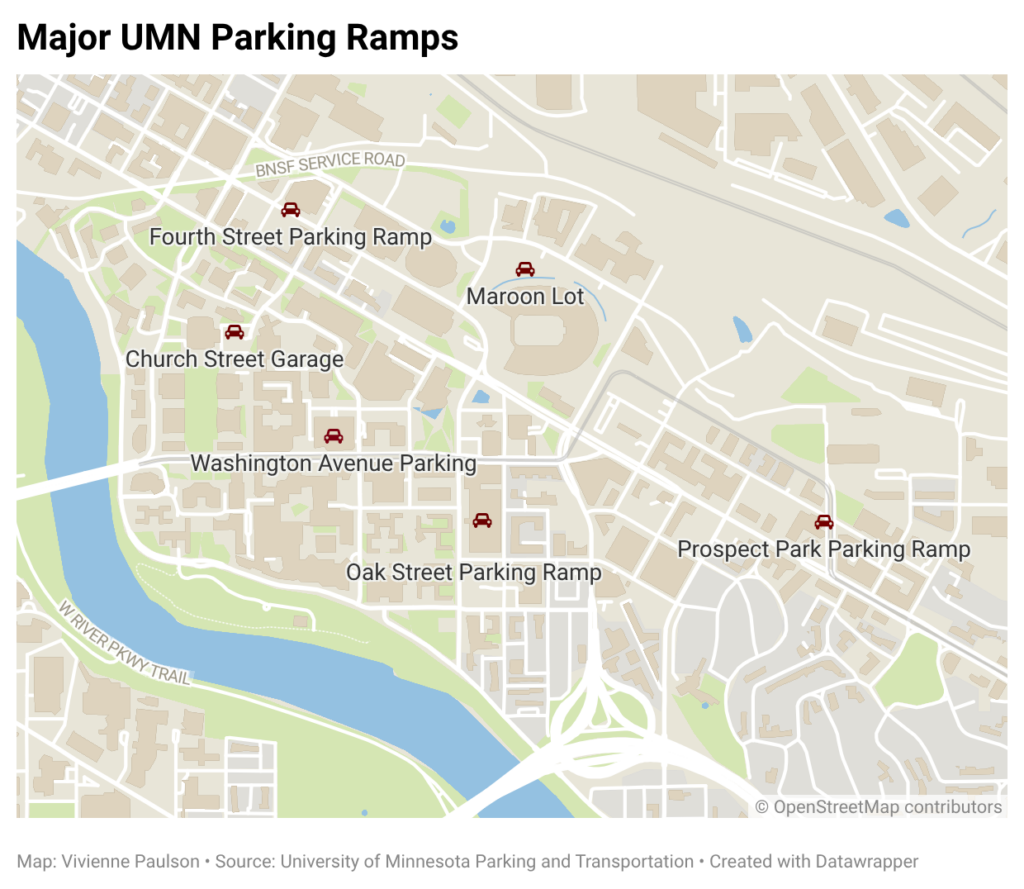
Transportation plays a major role in daily life for students across the East Bank, West Bank, and St. Paul campuses. Thousands drive to campus each day despite limited parking and costs that can exceed $100 per month or $15 per day.
The university operates more than 130 parking facilities, including ramps, lots, garages, and metered spaces. However, availability is limited. Daily rates range from $6 to $15 depending on location, while semester contracts run from about $87 per month for lots to nearly $150 for garages.
A Parking and Transportation Services (PTS) representative said in an emailed statement that public commuter discount rates have not increased in recent years.
“Hourly rates have been flattened to a peak rate of $3 and a non-peak rate of $1, with the daily maximum increasing incrementally,” the representative said. “The cost of commuter contract parking has risen incrementally over time along with staff and faculty contracts.”
Because demand is high, students often enter a queue system or join waiting lists for parking contracts. Even when they secure a spot, parking is frequently far from academic buildings, requiring students to rely on campus buses or walk to class.
Commuter Resources
As more students choose to live off campus, the need for support tailored to commuters continues to grow. The University of Minnesota’s Commuter Success Program is designed to bridge the gap commuter students face by offering financial support for meals, mentorship, and community.
Ellen Chiema, a third year student and intern with the program, said one of the biggest challenges is simply reaching commuter students before they leave campus. “A big challenge that we face is time, trying to catch commuters before they go home,” she said. With so many students heading out immediately after class, the program has to be intentional about when and how it creates opportunities for connection.
Each year, around 80 incoming students are selected to join the program and placed into small groups led by a student mentor, who serves as a point of contact throughout the year. Group leaders organize regular meetups including shared meals on campus.
The program also directly addresses a less visible challenge for commuters: food insecurity. Unlike students who live on campus and have meal plans, many commuters have to figure out meals between classes and long travel times.
CSP provides dining dollars so students can eat during the day without worrying about cost. “Not everybody can afford $16 every single day for a meal at the dining hall,” Chinema said. “This is trying to make sure that commuter students have the resources that they need, the community that they need, but also means to feed themselves.”
Beyond logistics, the program can have a lasting impact on whether students stay in school. Chinema said student leaders often become the first people students turn to when they are struggling. “There’s been plenty of times where students have come to them before they’ve talked to their advisor… about wanting to leave university, period,” she said.
Having someone who understands the commuter experience can make a critical difference for struggling students. “Talking with the CSP leads who can give them advice from a place of understanding and resources to feel like, ‘You know what? Actually, I’m going to stay.’”
For many commuters that sense of support can shape the decision to continue their education.
Commuter Student Consensus
There is no single answer when it comes to the question of if commuting is worth it. For many students, commuting isn’t a choice but the only viable option even with the tradeoff.
Commuter students save money in a time of rising costs, at the expense of their time, flexibility, and opportunities for connection. Still, there has been no better time to be a commuter student than now.
“There are more cost effective ways than ever to get around on campus,” a PTS representative said in an emailed statement. “If you aren’t sure if using transit or biking to campus is a good fit for you or for your commute, try it for a day or a week before ruling it out.”
Data shows three-fourths of students commute to the U. How universities will support a majority-commuter student body moving forward is where the future is headed.